

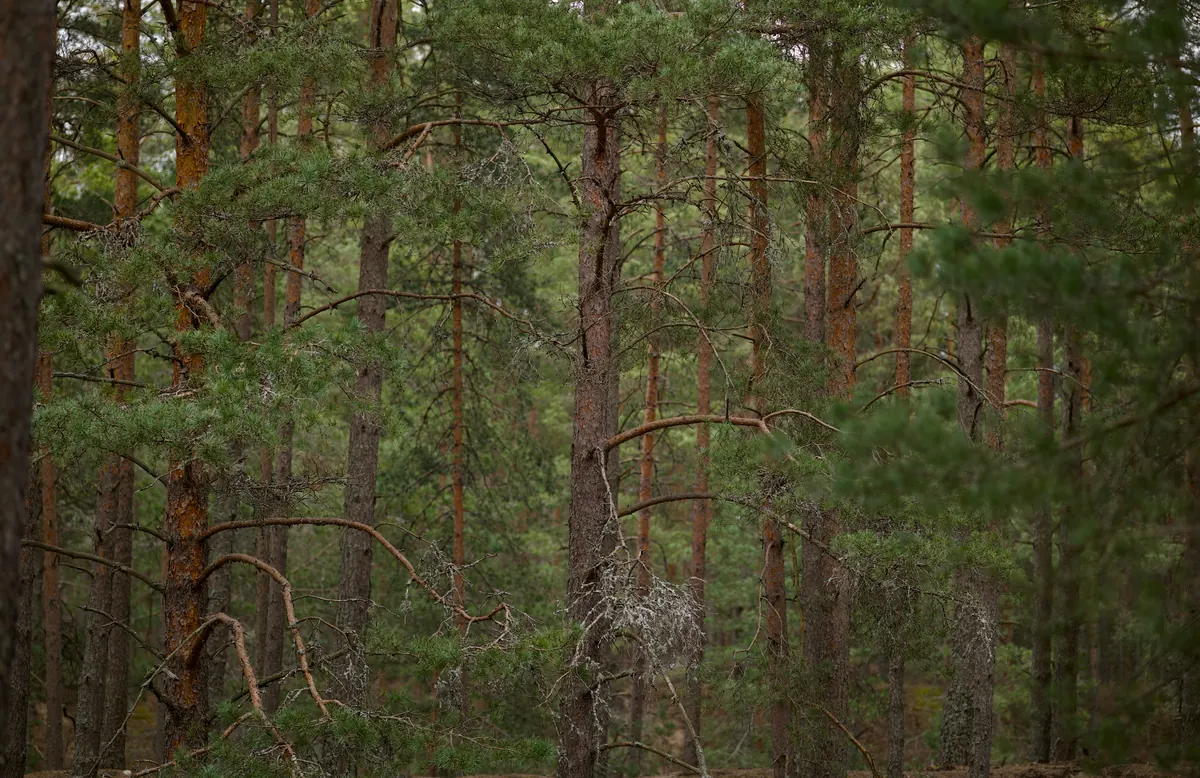
Loch Maree sits in a bowl of Torridonian sandstone and quartzite, and along its southern shore stands a fragment of the old Caledonian pinewood that once covered much of the Highlands. Scots pines here, some of them centuries old, grow among birch, rowan, juniper and heather, with boggy hollows and bare rock in between. That mix of ageing trees, standing dead wood and open glades is exactly what the pinewood specialists need, which is why a walk here can turn up crested tits and crossbills within an hour. What you actually see depends heavily on the month. Here is how the year unfolds.
Why these woods hold these birds
Commercial forestry plantations tend to be dark, uniform and short on insects. The old pinewood at Loch Maree is the opposite: humid, mossy, full of holes and rot. Crested tits need soft, decaying stumps and old trunks to excavate nest cavities, and they feed on insects and spiders picked from the bark of big pines. Crossbills need cones, and old trees produce them in cycles rather than on a reliable schedule. Wood warblers and redstarts want a scrubby understorey with plenty of caterpillars, while treecreepers and goldcrests work the trunks and needles year-round.
The wooded shore is part of the Beinn Eighe National Nature Reserve, managed by NatureScot, and the reserve car parks near Kinlochewe and at Slattadale both give access to good ground. Smaller fragments of the same woodland grow on the islands of Loch Maree itself and around Letterewe on the north shore. Because the pinewood intergrades with Atlantic oak and birch, you get a mixed bird community here rather than a strictly pinewood one.
Winter: bare trees, busy flocks
From November to February the wood can feel empty, and then suddenly it is not. Crested tits join loose roaming flocks: coal tits, blue tits, goldcrests, treecreepers and sometimes lesser redpolls moving together through the canopy. Find a flock and stay with it. The birds move steadily in one direction, so walk parallel to them rather than chasing.
Crossbills are at their most visible now because the cone crop is what holds them. Look for them high in the pines, often silhouetted, twisting cones off the branches and dropping the cores. Siskins chatter overhead, and if the loch is calm you may hear the thin calls of red-throated or black-throated divers carrying across the water. With daylight short, the productive window is roughly mid-morning to early afternoon.
Early spring: purrs, drums and early nests
Late February and March are the best months for the crested tit. The song is a rolling, mechanical trill — a purr that is almost too low-key for the size of the bird — and it carries well on a still morning. Listen near big pines with dead stumps and beside old, broken trunks. When you hear it, stop and be patient; the bird usually works its way into view.
Great spotted woodpeckers drum on dead timber, and crossbills start nesting absurdly early, often while snow is still lying. This is where the woods get tricky, because the three crossbill species are hard to separate.
Telling crossbills apart
- Common crossbill is the most widespread and the one most visitors will meet.
- Scottish crossbill is widely described as Britain's only endemic bird species, resident in the old Caledonian pinewoods.
- Parrot crossbill is the heaviest-billed of the three and turns up in some years.
Visual overlap is real, and identification now relies mainly on call. If you want the fine detail, record the calls on your phone and check them later against recordings, or accept the honest answer that many birds go down as "crossbill species". Birders who guess confidently in the field are usually wrong.
Dusk in early spring brings roding woodcock over the clearings — a low, croaking flight with occasional sharp squeaks. Golden eagles display over the ridges above the wood, and black grouse may be heard lekking on the moorland fringe if you are out before first light.
Late spring and summer: the full chorus
May is the richest month. Wood warblers deliver their spinning, accelerating song from birch and oak, tree pipits parachute down from the tops of pines, and common redstarts flick through the open glades with their tails shivering. Spotted flycatchers arrive last, usually in the second half of May, and cuckoos call from the far shore.
Be on the trail by five in the morning if you can manage it. Birdsong drops sharply after about nine, and the trails stay quiet until lunchtime. Midges arrive with the warmer weather from late May onwards, and the west Highland version is not a rumour — take repellent, a head net if you feel the cold less than the bites, and long sleeves.
Autumn: mixed flocks and movement
August and September quieten down, then October brings the flocks back together. Crossbills become restless and can appear in numbers in years when the cone crop elsewhere fails, moving through the pines with a hard, clipped call overhead. Redwings and fieldfares strip rowan berries along the woodland edge, bramblings sometimes join the finch flocks, and the last redstarts and tree pipits drift south.
This is also the most comfortable season to walk: fewer insects, softer light, and trees still carrying enough leaf to feel like a wood rather than a scaffold of trunks. Wind dictates everything. On a windy day the birds sit deep and low; wait for a calm one.
Planning your visit
Base yourself around Kinlochewe or Slattadale on the A832. Both ends of the reserve give access to pinewood trails, and a slow half-day covering a kilometre or two will produce more than a fast march around the whole loch. Early morning and the last two hours of daylight are consistently best. Bring binoculars — 8x42 is the usual all-round choice — plus waterproofs, midge protection in summer, and a spare warm layer, because the weather here changes faster than any forecast.
- Stay on the marked trails and resist the urge to push into the trees for a better angle.
- Keep your distance from nests, and never use recorded calls or playback in spring and summer.
- Keep dogs on a short lead through the wood between March and July.
- Check yourself for ticks after the walk, particularly on the legs and around the waist.
- Tell someone your route; phone signal is patchy along the loch shore.
One wet morning with nothing but siskins and a distant crossbill call is still a good morning here. Come back in a different month and the same trail will offer you an entirely different wood.
Photo: Lauri Poldre / Pexels