

Glenfinnan is one of the most photographed places in the Highlands, and a great many of those photographs are taken by people who pull in for half an hour, shoot the viaduct, and drive on. Stay for a full day and the place changes character. The coach parties leave, the light swings round the glen, and Loch Shiel — all 17 miles of it, running southwest from the monument — becomes the quiet centre of the trip rather than a backdrop.
What follows is a realistic one-day route, built around light rather than landmarks. It assumes you are driving and that you have given yourself the whole day, which is the only way it works.
Know the light before you go
Scottish daylight swings wildly across the year. Around midsummer, sunrise at Glenfinnan can be before 04:30 and sunset after 22:00, which gives you an absurdly long working day and a very short night. In midwinter you might not get first light until nearly 09:00 and you will be packing up by 15:30. Time your visit to the season, not to the clock. The shoulder months of April–May and September–October are the sensible compromise: workable hours, low sun, and a reasonable chance of mist on the loch at dawn.
Two things to check the night before. First, the cloud and mountain forecast — the west coast does its own thing, and a forecast that looks grim for Fort William can mean broken cloud and dramatic light twenty minutes down the road. Second, the Jacobite steam train timetable. It runs seasonally, roughly April to October, and times change from year to year, so check the operator's current schedule rather than relying on last year's. The train crossing the viaduct is a bonus, not the whole point of the day.
The day, hour by hour
This is a spring or autumn template. Shift everything by an hour or more in midsummer, and compress it hard in winter.
- 05:30 — Arrive at Glenfinnan. Park at the visitor centre car park (charges apply) or the station car park. Walk down to the shore by the monument for first light.
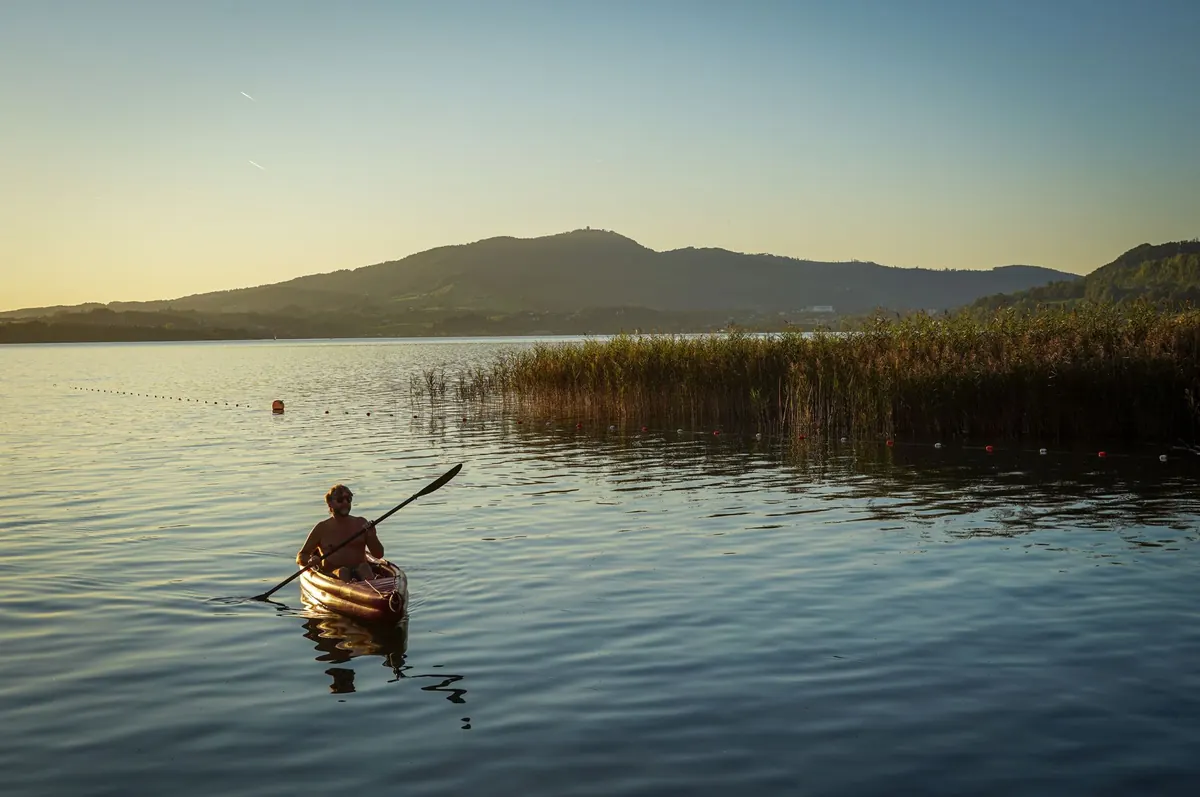
- 06:00 — Loch Shiel at the east end. This is your best chance of still water and reflections. Aim southwest down the length of the loch.
- 07:00 — St Mary and St Finnan Church. A short walk along the shore road. The church sits low against the water with the glen behind it.
- 07:45 — Breakfast. Flask, sandwiches, back of the car. Nothing is open this early.
- 08:30 — Walk up to the viaduct viewpoint. Twenty to thirty minutes on a clear path from the car park.
- 09:30 — Down to the glen floor. Follow the path under the arches for the classic low angle.
- 11:00 — Train, if it is running. Position well before you hear it.
- 12:30 — Lunch in Glenfinnan. The station has a small museum and a dining-car tearoom; there is also a hotel. Book ahead in summer.
- 14:00 — Drive the south shore road. Single track from Glenfinnan along Loch Shiel towards Polloch. Passing places, no hurry.
- 17:00 — Return east. Golden hour on the loch, then last light at the monument or the viaduct.
There is no fuel at Glenfinnan, so fill up in Fort William before you set out.
The viaduct: angles that work
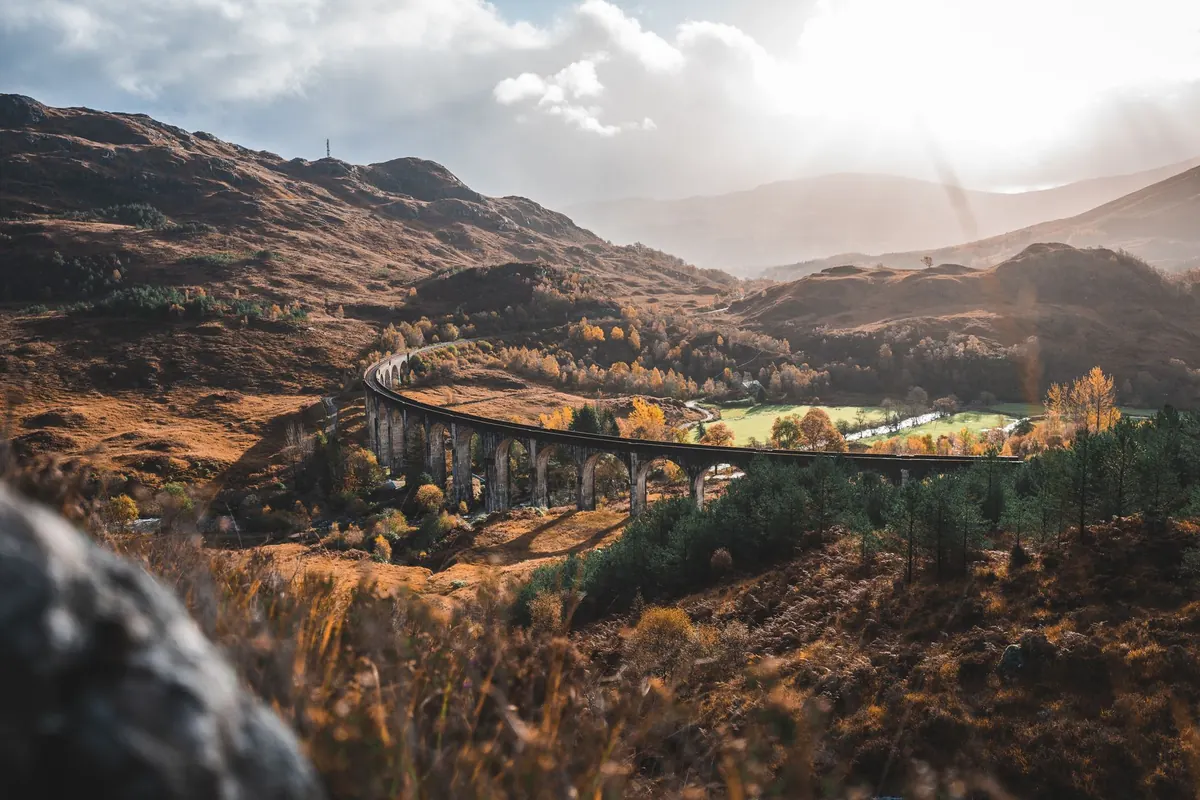
The viaduct's twenty-one arches curve across the glen, and the curve is the picture. Shoot across it from the hillside so the arches recede and overlap, using a long lens to compress them into a wall of stone. Then go down to the floor of the glen and shoot up, wide, with heather or birch branches framing the edge.
Do not ignore the structure itself. Mist rolling through the arches, an empty viaduct with no train at all, backlit rain — all of these are better than a flat, grey record shot of a steam engine.
Practical notes
The path up to the viewpoint is steep and can be muddy. Wear boots with grip. Midges appear as soon as the breeze drops, particularly from late spring onwards, so a head net in your bag costs nothing and occasionally saves the day.
Loch Shiel's east end
The monument stands where the loch begins, a tall tower with a lone kilted figure on top, and it does something useful in a composition: it gives scale. Put it small in the frame against the water and the hills behind, and the loch reads as the enormous thing it is.
For reflections, work the shallow eastern end at dawn, when the water is often glass. Use a polariser to cut glare off wet rock and to deepen the sky, but be sparing — at wide angles it can leave an uneven, patchy blue. For long exposures of moving cloud, bring a ten-stop filter and a solid tripod.
Down the quiet side of the loch
The single-track road from Glenfinnan along the south shore towards Polloch is the best part of the day for most people, and hardly anyone drives it. You get long views back up the loch towards the monument, forestry edges, and small bays where the water meets rock and bog myrtle. Give yourself an hour each way, more with stops. There is no phone signal for stretches, so tell someone your plan before you go, and take water.
Weather, midges and kit
Assume rain. West Highland weather moves fast, and a waterproof cover for your bag matters more than an extra lens.
- Waterproof jacket and trousers, plus a rain cover for the camera bag
- Tripod with a hook — hang your bag from it when the wind gets up on the loch shore
- Polariser, ND filter, spare batteries (cold drains them)
- Boots with grip, midge repellent and a head net from May to September
- Flask, food, cash or card for parking, and a paper map as backup
Wind is your main enemy on the loch shore; a hundred metres of shelter behind trees can turn a blurred frame into a sharp one.
Last light and the drive home
Finish where you started. In summer the sun sets far to the northwest and light can run straight down the length of Loch Shiel, turning the water copper. In winter it is gone before you have set up. Either way, give yourself fifteen minutes of blue hour before you pack up — it is often the best light of the day and almost nobody stays for it. Then drive carefully: single-track roads, deer on the verge, and a long way back to Fort William with tired eyes.
Photo: Clément Proust / Pexels