

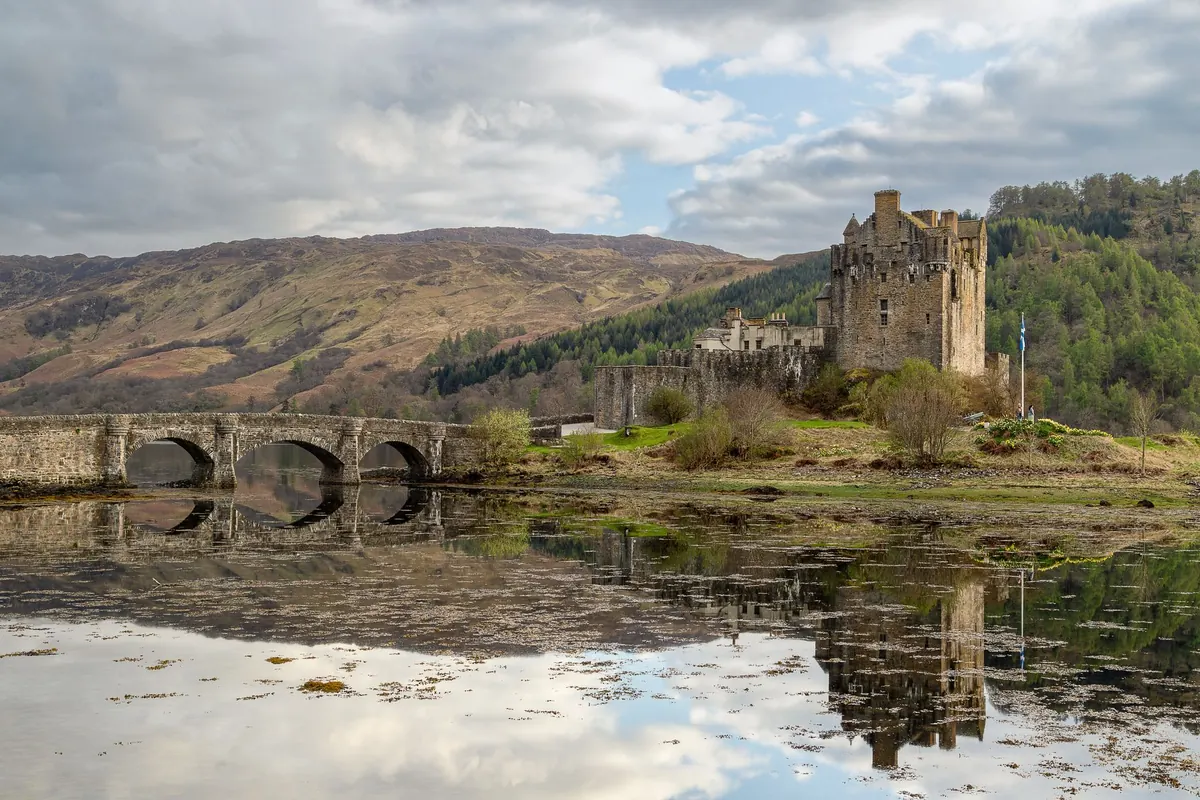
Two castles, one family, entirely different days out. Kilchurn Castle sits roofless on a spit of land at the north-east end of Loch Awe, reachable on foot and free to wander. Taymouth Castle rises from private parkland at the eastern end of Loch Tay near Kenmore, magnificent from a distance and firmly off limits inside. Both were built by branches of the Campbells, which makes the comparison more interesting than it first looks.
The short answer
Choose Kilchurn if you want to walk right up to a ruin, photograph it from several angles and spend an hour or two exploring. Choose Taymouth if you want a view, a village and a loch-side walk, and you are happy to admire a building rather than enter it.
- Kilchurn Castle: ruined, unstaffed, open access, close-up photography, mud in winter, no facilities.
- Taymouth Castle: intact and privately owned, no public tours, strong views from Kenmore and the loch shore, good village facilities nearby.
Kilchurn Castle: history on a peninsula
Kilchurn was built around the middle of the fifteenth century for Sir Colin Campbell, first of Glenorchy, as a stronghold at the point where the River Orchy meets Loch Awe. That position controlled movement through the pass at Brander and along the loch, which in the fifteenth and sixteenth centuries mattered a great deal.
The castle grew over the centuries. In the 1690s, under the first Earl of Breadalbane, it was converted into a barracks capable of housing government troops during the Jacobite period — a change that turned a lordly tower into something closer to a garrison. By the late eighteenth century it had been abandoned, and it has stood roofless ever since. What remains is substantial: the five-storey keep, fragments of a courtyard range, and a great deal of grass.
Because the loch level has changed over time, the setting looks different from how its builders saw it. Water levels were altered by drainage works in the nineteenth century and later by the Cruachan hydro scheme, so the castle now reads as a peninsula rather than an island. In high water, the ground around it gets soft and occasionally awkward underfoot.
Taymouth Castle: the Breadalbane palace
Taymouth occupies the site of Balloch Castle, built in the sixteenth century by the Campbells of Glenorchy. From 1801 the first Marquess of Breadalbane began replacing it with something far grander, and the house was substantially remodelled again in the 1830s and 1840s in a romantic, tower-and-turret style. Queen Victoria visited in 1842 and admired the setting; the village of Kenmore and its bridge over the River Tay were part of the same estate improvements.
The twentieth century was less kind. The castle was requisitioned during the Second World War, then passed through hotel and institutional uses, and later decades brought closure, decay and long-running restoration proposals. It remains privately owned and is not open to the public, so this is a castle to see from outside. Some estate paths have been closed or redirected at various times, so read any signage and turn back without arguing if a gate says no.
Access: a walk versus a view
The practical difference is straightforward. Kilchurn is an Historic Environment Scotland property with open access and no ticket desk. Taymouth has no visitor entrance at all.
- For Kilchurn, park considerately near the A85 at the north-east end of Loch Awe and follow the waymarked path towards the castle. You cross the railway line on the way, so use the proper crossing, take care, and allow roughly twenty to thirty minutes each way.
- Expect rough grass, stones and mud. Waterproof boots beat trainers, and the ground near the water is slippery when wet.
- Bring everything you need — there are no toilets, bins or cafés at the castle. Dalmally and the village of Lochawe are the nearest places for food and facilities, and seasonal boat trips from Lochawe sometimes run past the castle.
- For Taymouth, base yourself in Kenmore. You can park in the village, walk the bridge over the Tay, and follow public paths along the loch shore and riverbank for views of the castle across the water and lawns.
Photography: where to stand and when
Kilchurn
The castle rewards a bit of walking. The classic wide shot comes from the north shore near the A85, where you can frame the ruin against the water with Ben Cruachan behind it. That view needs calm conditions: on a still early morning, the reflection does much of the work for you. Once the breeze gets up, usually mid-morning, the mirror disappears.
Light matters more than gear. Sunrise from the east side lights the castle's face; late afternoon and evening give you softer, warmer tones, and a long exposure can smooth the loch when the wind drops. A telephoto lens used from a distance compresses the castle against the hills and gives a very different picture from the standard wide shot.
Two practical warnings. Midges are serious from late spring to early autumn, particularly at dawn and dusk — take repellent and cover up. Long grass in summer also means ticks, so check yourself afterwards. If you plan to fly a drone, check the current Historic Environment Scotland policy and the CAA Drone Code before you travel, and stay well clear of the railway line and other people.
Taymouth
You are photographing a facade behind trees, so think about framing rather than access. The view from Kenmore village and from the bridge over the Tay gives you the castle above the river, and the loch shore and estate edges offer longer views across the parkland. The main front faces roughly south towards the water, which means it holds light through much of the day and picks up warmth from the west in the late afternoon.
Seasonal detail helps here. Autumn colour in the estate trees and mist sitting on Loch Tay are the two conditions most worth planning around, and a clear winter day can put snow on the hills above the far shore. A tripod and a longer lens are more useful than a wide angle, since you will often be cropping out fences, gates and parked cars. Stay on public paths and keep out of anything that looks like private ground.
Which one suits your trip?
If you have half a day and want to be inside a piece of history, Kilchurn wins comfortably. If you are travelling with people who prefer a short walk, a village and a cup of coffee, Kenmore and Taymouth are the better combination. Photographers with a car can reasonably do both in a long day, driving from Loch Awe across to Loch Tay, but the light is unlikely to be good at both ends.
Practical notes before you go
Check current opening and access information before setting out. Kilchurn is an outdoor site with no staff on hand and can be closed for conservation work or affected by high water; Taymouth estate paths and gates change with ownership and maintenance. Scottish weather turns quickly, so pack waterproofs whatever the forecast says, and remember that daylight in midwinter is short — plan your arrival with that in mind.
Combining a visit with other stops works well in both areas: Oban, Inveraray and the Pass of Brander sit within easy reach of Loch Awe, while Killin, the Falls of Dochart, Ben Lawers and the Crannog Centre at Kenmore fill out a Loch Tay day neatly. Give yourself more time than you think you need. Both lochs are long, the roads are slower than they look on a map, and the best photographs usually come from waiting ten minutes longer than you planned.
Photo: Stuart Robinson / Pexels