

Ospreys keep a strict calendar. By late March the first birds are usually back over Strathspey, and by early April the nest in the Abernethy pinewoods has a tenant again. They have been doing this for a very long time: it was at Loch Garten that ospreys returned to breed in Britain in 1959, after decades of absence, and the site has been watched over by wardens and volunteers ever since. That long history is why the viewing here is so good. The birds are used to people, the hides are well placed, and someone always has a telescope pointed at the right tree.
What follows is what to expect through the season, how to read the sky, and how to watch without disturbing the thing you came to see.
Osprey Season, Month by Month
Timing shifts a little each year with weather and fishing conditions, but the shape of the season is reliable.
- Late March to early April: Arrival. Males often turn up first and start rebuilding the nest, adding sticks and re-lining the cup. Females follow, and there is a burst of noisy courtship and aerial display.
- April: Eggs are laid, usually two or three, and incubation begins. The female spends most of her time low in the nest; the male's job is to keep her supplied with fish.
- May: The quiet month. The nest can look abandoned for long stretches, which is normal. The live camera in the visitor centre is often the only way to see what is really going on.
- June: Chicks hatch and the nest becomes busy. The male fishes almost constantly, and you can watch him hand over a trout or a pike to the female, who tears it up for the young.
- July: Fast growth, lots of wing-stretching, and first flights, often around the middle to end of the month. This is the most dramatic stretch of the season.
- August: Fledglings practise hunting and are still being fed. The family begins to drift.
- September: Departure. The birds head south, crossing to West Africa for the winter. By the end of the month the nest is usually empty.
If you can only pick one window, aim for mid-June to mid-July. If you want quiet hides and fewer people, come in April or early May and accept that the birds will be sitting tight.
Using the Hides and the Osprey Centre
The RSPB centre at Loch Garten sits in Abernethy Forest, a few minutes from Boat of Garten. The nest tree is some distance away, so the centre provides telescopes, a live camera feed and staff who can tell you exactly which bird is which. Opening days vary through the season and the centre generally closes once the birds leave, so check before making a long drive.
A few things make the visit easier. Arrive at opening time: mornings are cooler, the light is softer, and the volunteer cover is quieter, which means more time at a scope. Bring your own binoculars if you have them rather than relying on the ones on the shelf. And give yourself two hours rather than forty minutes, because ospreys are slow. A bird may sit motionless for half an hour and then deliver the best ten seconds of your week.
Spotting Ospreys Away from the Nest
The pair at Garten hunt over a wide area, and you do not need a hide to see them. Anywhere with a clear view of open water is worth a look: Loch Garten itself, nearby Loch Mallachie, the River Spey, and the lochs around Aviemore and Carrbridge.
Learn the flight silhouette and you will start picking them out. From below, an osprey is mostly white, with long wings bent at the wrist into a shallow kink, a dark line through the eye and a dark back. The kink is the giveaway, and it is the feature to look for when a bird is soaring high. A buzzard soars with wings held in a shallow V and looks chunkier; a gull shows a similar bend but flaps with a looser, more elastic action.
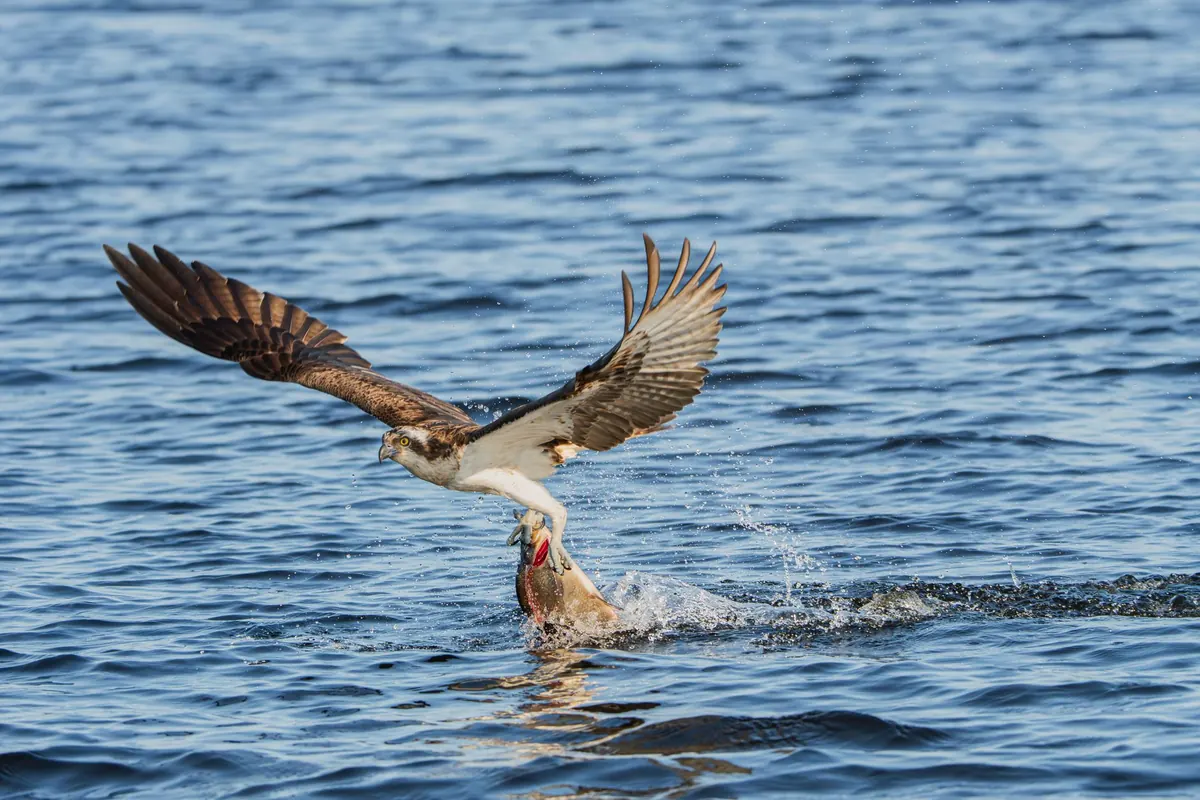
Then watch for the plunge. An osprey hovers, drops with wings half-folded and feet first, and hits the water in a splash you can hear from a fair distance. It shakes itself off in midair, then carries the fish head-first, which is more aerodynamic. Early morning and late afternoon are the best fishing hours, and dull, breezy days can be better than bright, still ones.
Watching Ethically
Ospreys have recovered in Scotland partly because people left them alone. Keeping it that way is straightforward.
- Stay in the hides and at marked viewpoints. Do not walk towards a nest for a closer photograph, however tempting the angle.
- Keep your voice down and your movements slow. A nest is a nursery, not a stage.
- Do not fly drones anywhere near the nest or over the forest. They cause real disturbance and are best left at home.
- Never use recorded calls or playback to bring a bird closer.
- Keep dogs on a lead, and stay on paths, especially in spring when ground-nesting birds and capercaillie are sensitive to disturbance.
- Do not post precise nest locations online. Share the photograph, not the coordinates.
- Respect any temporary closures or diversions. They are there for a reason and are usually short.
If you spot a nest from a forest road, watch from the car and move on. A car is an excellent hide; a person standing beside it is not.
What Else You Might See
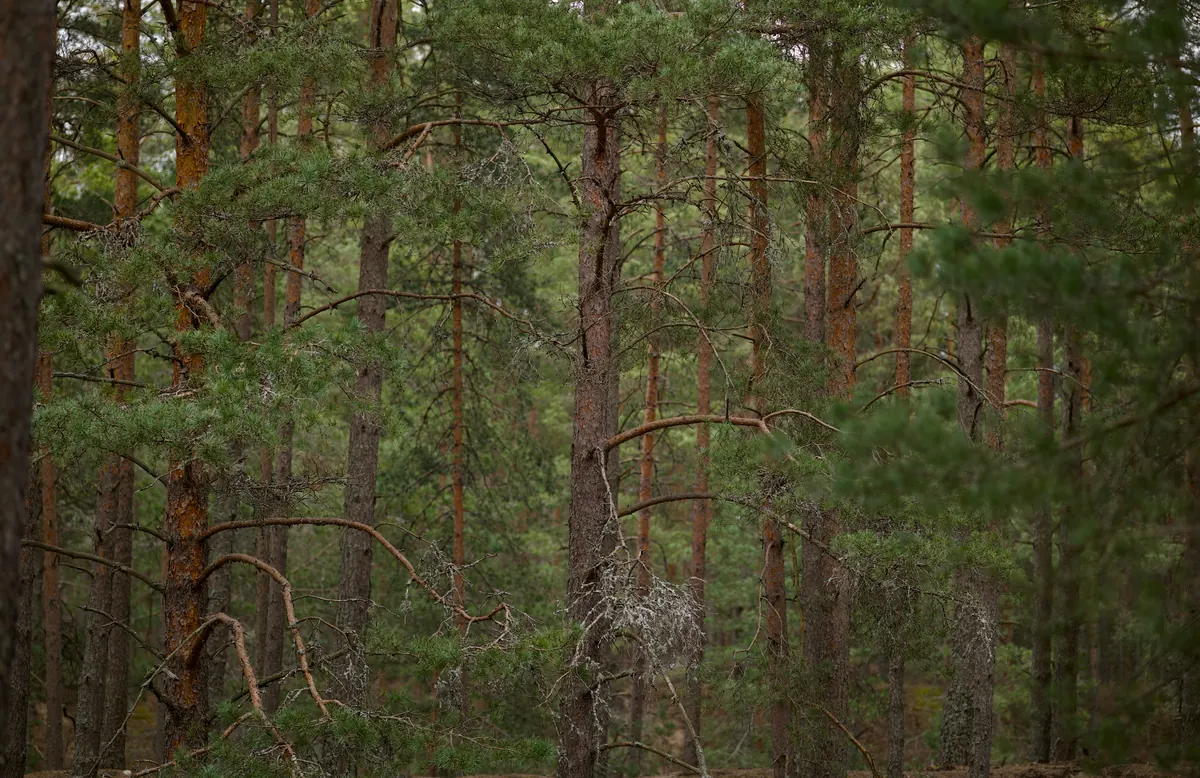
Garten is a good place to be patient in. Red squirrels work the feeders near the centre, crested tits and coal tits move through the pines, and crossbills call from the tops of the trees. On the loch you may find goldeneye, and in the wider forest there are redstarts and wood warblers in summer. Keep an ear out for the osprey's own call, a high, whistled series of notes that carries a long way when a bird is alarm-calling over the nest.
Planning Your Day
Late April through August is the practical season, with June and July the peak. Bring binoculars, warm layers, a waterproof and midge repellent for calm summer evenings. A scope helps at the centre but is not essential.
Build the trip around the morning: centre first, then a slow walk through the Abernethy pines, then a picnic by the loch to watch for a fishing run. Boat of Garten and Aviemore are close for food and fuel. And keep a note of what you saw and when; a small notebook makes the next visit sharper, and the season never looks quite the same twice.
Photo: Lorenzo Manera / Pexels